

Best Heavy-Duty Bumpers for Hitting Deer and Wildlife
December 18, 2025
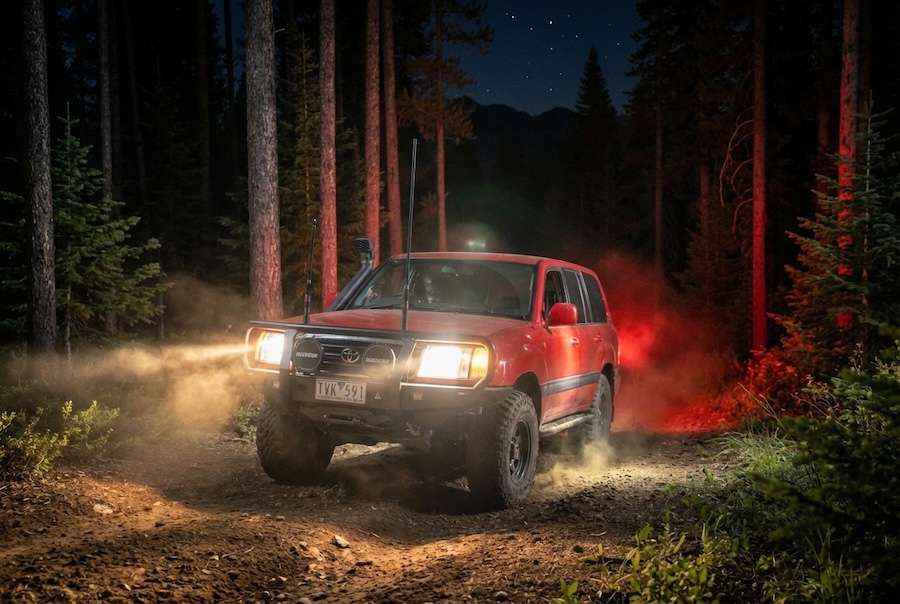
If you drive rural highways or backcountry roads often enough, a wildlife encounter isn’t a matter of if, but when. Every year, there are over 1.5 million deer-vehicle collisions in the U.S. alone. For drivers in elk or moose country, the stakes are even higher.
When you’re miles from the nearest service station, hitting a large animal isn't just an insurance inconvenience—it’s a situation that can leave you stranded with a disabled vehicle. Most factory vehicles simply aren't built to take that kind of hit and keep driving.
The difference between a tow truck bill (or worse) and driving home often comes down to what’s on the front of your rig. While no accessory can guarantee zero damage, upgrading to a heavy-duty, full-replacement bumper is your primary line of defense. Here is why specialized engineering matters when you’re sharing the road with wildlife.
Why Most Factory Front Ends Fail in Animal Strikes
Factory bumpers are largely made of plastic, foam, and light-gauge aluminum. They are designed to crumple on impact to absorb energy. While this is excellent for safety in a high-speed collision with another car, it is disastrous when you hit a deer at 55 mph.
In a wildlife strike, the factory bumper often collapses backward. This allows the animal to impact the fragile components sitting right behind the grille: the radiator, the intercooler, the AC condenser, and sometimes even steering components. Once the cooling system is punctured, your engine overheats, and your vehicle is dead in the water.
A bumper designed for wildlife protection needs to do the opposite of a factory bumper in this specific scenario. Instead of crumpling, it needs to provide controlled resistance, absorbing the blow without folding into the engine bay.
Grille Guards vs. Full Replacement Bumpers
When looking for protection, many drivers start by looking at "brush guards" or grille guards. It’s important to understand the structural difference between these and a true replacement bumper.
The Limitations of Brush Guards
A brush guard is typically a tubular steel framework that bolts over the existing factory bumper. While they look tough, they often lack the structural mounting points to handle significant force. In a hard impact with a deer or elk, many brush guards will fold backward, effectively crushing the grille and hood they were meant to protect. They are great for pushing aside light brush, but they often provide only cosmetic confidence against heavy impacts.
The Advantage of Full Replacement Bumpers
A full replacement bumper removes the factory unit entirely. It bolts directly to the vehicle’s chassis frame rails, integrating with the vehicle’s structure.
- Integrated Strength: Because they replace the bumper cover, they offer a solid shield for the radiator and lower engine components.
- Energy Management: They are designed to absorb and redirect impact energy into the frame, rather than into the bodywork.
- System Protection: The primary goal is to keep the vehicle drivable. This means prioritizing the protection of headlights and cooling systems.
For drivers serious about mitigating damage from animal strikes, a full replacement bumper is the only reliable option.
Why Steel Thickness and Construction Matter
You will see many bumpers advertised as "heavy-duty," but the specs tell the real story. When it comes to wildlife protection, material thickness is non-negotiable.
The Cruiser Company, available through Long Range America, uses 5mm (approximately 3/16 inch) steel for the main construction of their bumpers. This isn't arbitrary. This thickness provides the necessary rigidity to withstand an impact without deforming significantly.
Thinner metals might save a few pounds, but they risk bending under the concentrated force of an animal strike. And construction quality goes beyond just the sheet metal. How the bumper is welded and reinforced internally determines whether it stays rigid or twists on impact. A bumper built for wildlife protection focuses on force management, ensuring the bumper takes the beating so your vehicle doesn't have to.
Impact Deflection: The Engineering Advantage
Material strength is only half the battle; geometry is the other. A flat, brick-like bumper might stop an animal, but it doesn't control where that energy goes.
The Cruiser Company designs its bumpers with specific angles and wing structures to influence impact deflection.
- Deflecting Away: The angled wings are designed to push the animal away from the center of the vehicle during an off-center hit, which is where many strikes occur.
- Preventing Roll-Under: The forward structure and approach angles help push the object down and away, reducing the terrifying possibility of an animal rolling under the vehicle and damaging the steering or suspension.
- Minimizing Secondary Damage: By controlling the deflection, the bumper helps prevent the animal from sliding up the hood and into the windshield.
This engineering approach doesn't just block the hit—it actively manages the impact to reduce the severity of the aftermath.
Australian Heritage, American Wildlife
It might seem odd to look overseas for American wildlife protection, but the engineering philosophy behind The Cruiser Company is born from one of the harshest driving environments on Earth: the Australian Outback.
Australia has a massive population of kangaroos, which are notoriously unpredictable and prevalent on remote highways. Kangaroo strikes are a daily reality for Aussie drivers, often occurring far from cell service or help. A disabled vehicle in the Outback can be dangerous.
Consequently, Australian bumper design evolved out of necessity. They had to work. The Cruiser Company has spent years refining designs that protect vehicles against kangaroo strikes during long-distance travel.
This heritage translates perfectly to North American roads. Whether it’s a whitetail deer in Pennsylvania, an elk in Colorado, or a moose in Maine, the physics of the impact are similar. You need a barrier that prevents the animal from disabling the vehicle. A bumper proven to handle the rigors of the Outback is more than capable of handling the wildlife on American highways.
Why Long Range America Recommends The Cruiser Company
At Long Range America, we specialize in equipment that extends your vehicle's capability and reliability. We don't just sell accessories; we sell the ability to get there and back.
We recommend The Cruiser Company bumpers because they align with that mission. They aren't built for show. They are built on a foundation of structural engineering and real-world protection.
When you are equipping a vehicle for overland travel, rural commuting, or work in wildlife-heavy areas, you need gear that performs when it counts. TCC bumpers offer that peace of mind. They balance heavy-duty protection with smart design, ensuring that your airbag sensors still function correctly while providing the armor your vehicle needs.
The Best Bumper Is the One Built for the Impact You Hope Never Happens
If you live or travel in areas with high wildlife activity, relying on a plastic factory bumper is a gamble with your safety and your vehicle's reliability. A heavy-duty, full replacement bumper from The Cruiser Company changes the equation. It transforms your front end from a liability into a shield.
When wildlife is part of your driving reality, upgrading your bumper isn't just about making your rig look tough—it's about making sure you make it home. Shop yours today at longrangeamerica.com.